
January 16, 2026
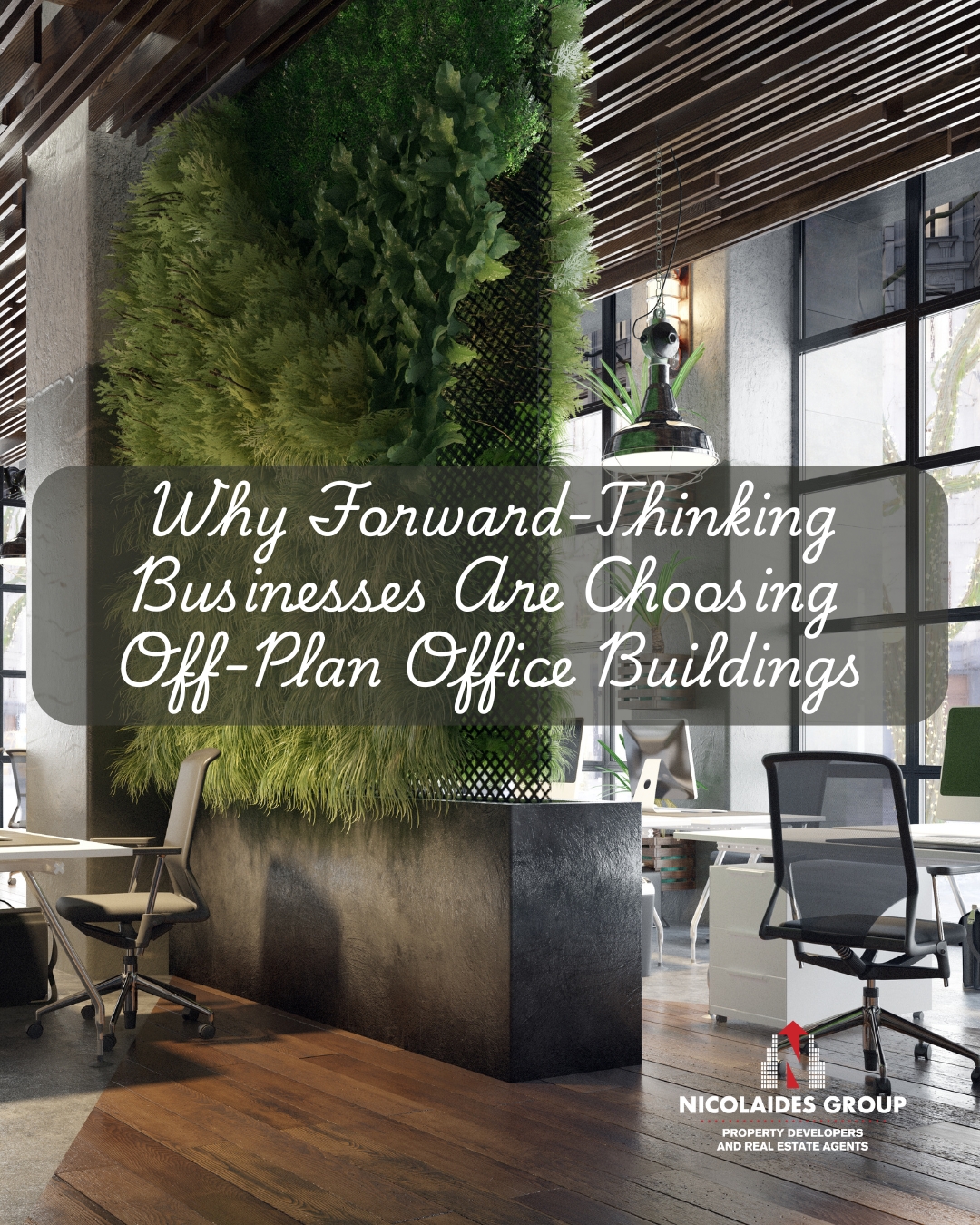
Why Forward-Thinking Businesses Are Choosing Off-Plan Office Buildings
For decades, the office was treated primarily as a functional necessity — a place to house staff, equipment, and daily operations. Today, that mindset has shifted dramatically. Offices are increasingly viewed as strategic assets that influence productivity, brand perception, long-term costs, and even talent retention. As a result, more businesses are reconsidering not only where they locate, but how their office space is designed and acquired.
One of the clearest outcomes of this shift is the growing interest in off-plan, purpose-built office buildings.
Offices as Strategic Infrastructure
Modern businesses operate in a highly competitive environment. Clients expect professionalism from the moment they arrive, employees expect comfort and efficiency, and management expects flexibility and long-term value. The office is no longer a neutral container — it is infrastructure that supports business strategy.
This evolution has exposed the limitations of many older or converted buildings. Spaces originally designed for residential use or mixed purposes often struggle to meet the operational demands of contemporary companies. Issues such as inadequate vertical circulation, limited parking, insufficient floor loading, poor acoustics, or outdated mechanical systems can become long-term constraints.
Purpose-built office buildings address these issues at a fundamental level, because they are designed from the outset to serve professional use.
The Importance of Purpose-Built Design
A dedicated office building differs from a converted structure in more ways than appearance. Structural grids, ceiling heights, mechanical systems, access points, and shared areas are all planned to support business activity. This includes:
- Professional entrances and reception areas
- Proper lift capacity and circulation
- Efficient parking layouts
- Floor-plates that allow flexible layouts
- Infrastructure that supports modern technology requirements
For companies planning long-term occupancy, these elements are not luxuries — they are operational necessities.
Why Off-Plan Is Gaining Ground
Buying or securing office space off-plan is often misunderstood as a speculative move. In reality, for many businesses it is a form of strategic planning.
One of the key advantages of off-plan acquisition is early involvement. Businesses are able to participate in decisions that directly affect how the space will function: layout configurations, service provisions, partitioning strategies, and sometimes even façade or signage considerations. This level of influence is rarely possible once a building is completed.
Cost predictability is another important factor. Off-plan agreements often provide clearer long-term budgeting compared to adapting an existing space, where unforeseen structural or compliance issues can significantly increase costs.
Most importantly, off-plan offices allow companies to design for future operations, not past constraints.
What Modern Office Buyers Look For
Today’s office buyers are highly informed. Their decision-making criteria extend far beyond square metres and price per unit.
Technology readiness is now fundamental. Buildings must support data-heavy operations, modern security systems, and future technological upgrades without disruptive retrofitting.
Energy efficiency has moved from a secondary consideration to a core requirement. Lower operational costs, environmental responsibility, and regulatory compliance all point toward high-performance buildings.
Visibility and accessibility also play a critical role. Offices located on main roads or prominent urban routes offer not only convenience but also brand exposure — an increasingly valuable asset for professional firms.
Finally, quality of materials and finishes matters more than ever. Durable, well-chosen materials reduce maintenance costs and contribute to a professional working environment that employees and clients alike appreciate.
Location as a Business Multiplier
The value of location is often underestimated. Proximity to amenities, transport links, and city centres directly affects daily operations. Easy access improves punctuality, reduces stress for staff and visitors, and enhances the overall perception of the business.
Equally important is how a building relates to its surroundings. Offices that are visible, easy to identify, and well-integrated into their urban context tend to perform better over time, both in terms of usability and long-term value.
Offices as Long-Term Assets
For many businesses, purchasing an office is one of the largest capital investments they will make. When approached thoughtfully, it can serve multiple roles: operational base, brand statement, and long-term asset.
High-quality, purpose-built office spaces tend to retain relevance longer than generic buildings. Their adaptability allows them to respond to changes in working patterns, whether that involves growth, restructuring, or future leasing.
In this context, off-plan offices are not about short-term gain. They are about control, foresight, and alignment between space and strategy.
Looking Ahead
As businesses continue to evolve, so too will their expectations of the spaces they occupy. The growing preference for off-plan, purpose-built office buildings reflects a broader understanding: that where and how a company works is inseparable from how it performs.
For organisations willing to think ahead, the office is no longer just a cost — it is a carefully planned investment in their future.